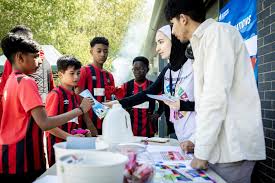
Two UN Football for the Goals (FFTG) members have been piloting a new Citizen Science project with university researchers to find ways to progress the United Nations Sustainable Development Goals (SDGs) and make positive impacts for their local communities.
Leicester Nirvana and Eintracht Peitz have been working alongside De Montfort University to keep an SDG diary which captures experiences of sustainability challenges showing their attempts and successes in overcoming them.
The journal also reports impacts of the weather on football operations over time, alongside other issues that affect community clubs including players’ health, financial welfare, partnerships, education and future ambitions. This data is then analysed to identify patterns in challenges and ways to overcome them to develop policies and toolkits to enable more clubs to become sustainable. After a successful pilot, which has identified, and improved, some of the problems with the journaling process, the project is now ready to offer other clubs worldwide to participate.
Dr Mark Charlton of De Montfort University, who has co-developed the research project with Ivan Liburd of Leicester Nirvana and Sebastian Bubner of Eintracht Peitz, said: “Piloting the research over the past three months has already produced impactful results and informed how the project moves forward. For example, analysis of the data shows both clubs have made progress across environmental, social, educational, and community-focused aspects of the SDGs, despite facing financial and resource-related challenges. Without their efforts, the findings show their communities in the UK and Germany would face environmental degradation, reduced access to sports, weakened social cohesion, and missed development opportunities. The evidence so far indicates their work goes far beyond football – it strengthens resilience, fosters equality, and builds a more sustainable future for everyone.”
Joining the Citizen Science project as a volunteer co-researcher can bring a number of benefits for your club, including:
- Increased awareness of sustainability challenges to help identify areas where they can make meaningful changes
- Empowerment through data to make more informed decisions on sustainability issues.
- Enhanced community engagement through promoting football clubs as community leaders in sustainability.
- Strengthening partnerships by fostering networking and knowledge sharing, opening opportunities for joint initiatives and support.
- Capacity building by developing skills in data collection, analysis, and reporting
- Visibility and Recognition: aligning clubs with global sustainability efforts, increasing their profile and appeal to sponsors, fans, and partners.
Citizen Science researchers also meet regularly online to network, discuss sustainability issues and findings. Further benefits are expected to include the co-publication of research outputs, learning opportunities, personal enjoyment, social benefits, the satisfaction of contributing to scientific evidence and the potential to influence sustainability policy.
Anyone interested in taking part should contact Dr Mark Charlton for further information and an application pack via mcharlton@dmu.ac.uk
 Sustainability Field Notes
Leave a comment