While progress on the Net Zero Football Project has been slow recently, I’m pleased to report that some teams are moving forward with momentum and developing a special bond as they make progress on their climate ambitions. Namely, these are Leicester Nirvana and Eintracht Peitz, the two clubs that helped me instigate the project and purposefully partnered their activities to the United Nations Football for the Goals framework. There is some more news coming on this in coming weeks – hopefully during COP 29 in November. One non-sports related outcome to the project has been the ethnographic observation of how community sports clubs’ leaders are providing activities for young people in order for them to prosper as individuals not just athletes. There was no doubt when I met coaches from Leicester Nirvana for the first time that their climate action ambitions were anchored deeply in providing education, social mobility and attempts to break the generations-long poverty cycle of the Highfields estate – some of which is in the poorest postcode in Britain. Likewise, Eintracht Peitz, near Cottbus in the east Germany, is aiming to raise employment aspirations of its young players to find good work in a region facing significant social challenges, especially around economy and infrastructure. These observations led to a conversation with a professor at Brandenburg Technical University (BTU), Cottbus, Germany about how we can support these young players in Leicester and Peitz to gain the competencies to access jobs in the future green economy and improve the lot of their towns and cities, in consideration of skilled worker shortages and the draw of bigger, more attractive cities.
Brain Drain
The first consideration was that not enough young people in marginalised communities make it to the skilled labour workforce, acknowledging that talent is there, but opportunity is not. Then there’s another scenario, that once a young person is upskilled, through university study or apprenticeship, they leave the region for cities offering greater opportunities. This exasperates the labour market challenge locally and impedes the chances of regional growth or investment. In the East Midlands, there have been challenges with the “brain drain” phenomenon where graduate talent leaves for better employment opportunities elsewhere, particularly in larger cities like London, Manchester, or Birmingham. Several factors contribute to this:
- Job Market Disparities: Graduates often move to areas with more diverse and higher-paying job opportunities, especially in sectors like finance, technology, and creative industries, which may not be as prominent in the East Midlands compared to larger metropolitan areas.
- Higher Education Networks: While the region is home to well-regarded universities (e.g., De Montfort University, Nottingham Trent, University of Leicester, the University of Nottingham, Loughborough University, University of Lincoln etc), many graduates choose to relocate after completing their studies due to limited high-skilled job opportunities locally.
- Investment and Infrastructure: Some areas of the East Midlands have seen less investment in high-growth sectors that typically attract and retain young professionals. This can create a mismatch between the skills produced by local universities and the available jobs in the region.
- Campaign Failures: There have been efforts to tackle this issue, such as through regional development initiatives and partnerships between universities and local businesses to create more pathways for graduates to remain and work in the region.
Coal Mining Regions in Transition
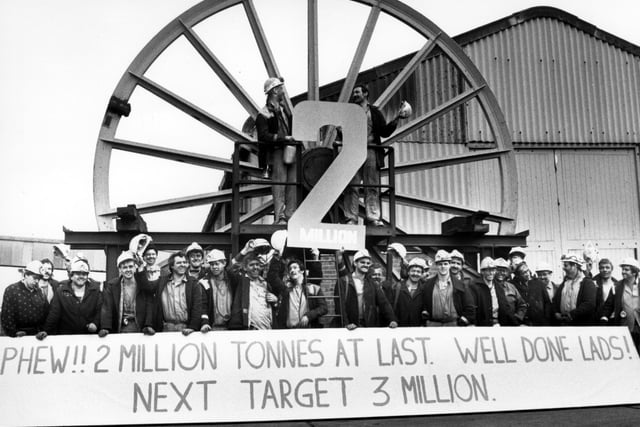
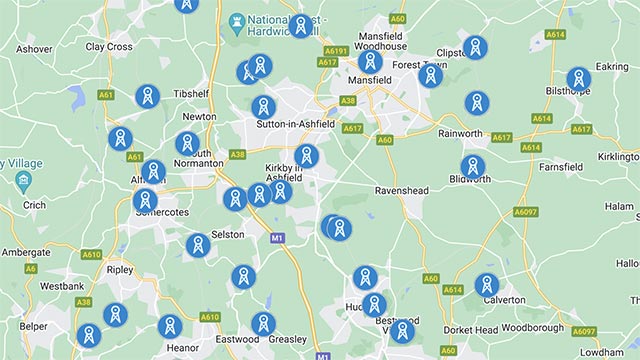
In the discussion it was pointed out to me that the East Midlands, like Lausitz (where BTU is based) is a ‘coal region in transition’. This is something that had not occurred to me before, but the map above, taken from miningheritage.co.uk, shows how reliant the region was on mining over many decades. In fact, coal mining in the East Midlands, particularly in Derbyshire, Nottinghamshire, and Leicestershire, dates back to Roman times, when surface coal deposits were exploited for small-scale domestic use. By the Middle Ages, coal was being mined more extensively as a source of fuel for homes and blacksmiths, and the industry began to grow slowly. The Industrial Revolution of the 18th–19th Century saw the demand coal soar, when it became the primary fuel for steam engines, railways, factories, and domestic heating. This led to a significant expansion of coal mining in the East Midlands, especially in Nottinghamshire and Derbyshire, as well as in parts of Leicestershire. After World War II, the coal mining industry began to decline. The 1980s marked some of the most defining moments in the history of East Midlands coal mining, during the UK miners’ strike of 1984–85. This strike, led by the National Union of Mineworkers (NUM), was in protest against pit closures proposed by Margaret Thatcher’s Conservative government. The strikes, and aftermath, caused deep divisions within mining communities, and many pits were closed in the following years, accelerating the decline of the industry. By the late 20th century, coal mining in the East Midlands had almost completely disappeared. The last major pits in the region, such as Thoresby Colliery (Nottinghamshire) and Harworth Colliery, closed in the 1990s and early 2000s. The closure of Thoresby Colliery in Nottinghamshire, as recently as 2015 marked the end of deep coal mining in the East Midlands, recognised in the image and linked by the Worksop Guardian for its remarkable history.
Coal mining in the Lausitz (Lusatia) region, which spans parts of eastern Germany and western Poland, has a rich and complex history that has significantly shaped the landscape, economy, and communities of the area starting in the 17th and 18th on a small scale before playing a pivotal role in the Industrial Revolution of the 19th century when demand for energy, particularly for nearby industrial cities such as Berlin, Dresden, and Leipzig, skyrocketed, and mining in Lausitz became a critical resource. After World War II and the formation of communist East Germany, coal mining in Lausitz reached its peak. The region became a major supplier of energy for East Germany. The German Democratic Republic (GDR) relied heavily on lignite as a cheap and abundant source of energy for its economy. The reunification of Germany in 1990 marked the beginning of significant changes in the Lausitz coal mining industry. After the fall of the GDR, many of the state-run mines and power plants were no longer economically viable in a reunified market-driven Germany.
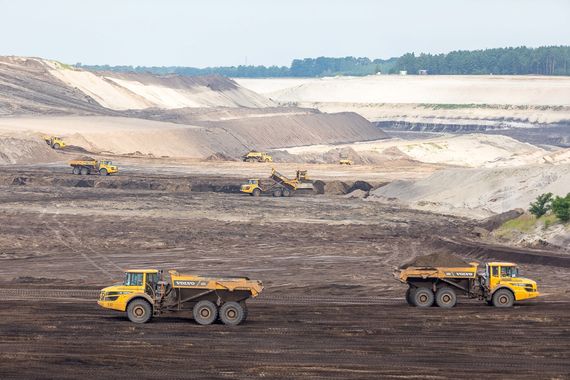
In recent years, the Lausitz region has been at the heart of Germany’s national debate about coal and climate policy. As Germany seeks to reduce its greenhouse gas emissions and transition to renewable energy, coal mining—particularly lignite (brown coal)—has faced increasing pressure. Germany’s plan to transition to renewable energy, known as the Energiewende, has made the region’s lignite less attractive as an energy source. The rise of wind, solar, and other renewables, alongside growing concerns about climate change, has led to a national commitment to phase out coal entirely. In 2019, Germany’s Coal Commission announced that coal would be phased out by 2038, including the lignite mining in Lausitz. The region is now undergoing a gradual transition away from coal-based energy production. The image above is from the operating coal mining company in the region LEAG near Cottbus. This transition poses significant challenges for Lausitz, as the region still relies heavily on coal mining for jobs and economy. To mitigate the impact, Germany has committed significant funds for a “just transition” to support new industries, infrastructure, and green energy projects in the area. With both regions at different stages of transition, there is a shared commonality that we lose well-educated talented young people to bigger cities. Yet in the bigger picture, collectively, universities play a crucial role in addressing the skilled labour shortage in Europe. Here lies the ‘Brain-Drain’ challenge as university students move on to “greener pastures” following graduation. This translates into a lack of necessary human capital for the transformation processes, and the resulting poor economic prospects further exacerbate the graduate retention challenge. Consequently, these coal regions face the danger of being left behind in the net-zero transition.
Together with BTU we are developing a comparative case study approach, to investigate opportunities and challenges faced in retaining university young adults in Leicestershire/UK and Lusatia/Germany and we have developed a project and funding bid to this effect. This will help us understand motivations of young adults to study in these regions and the drivers for staying in or leaving the regions after graduation. Hopefully the results will provide valuable input for measures development by policymakers and businesses to counteract brain-drain for a Just Transition in both areas and provide greater opportunities and economic growth for those living in coal transition regions. It’s not quite the research project I had in mind when the football project started but I am really enjoying how this has developed from the interactions with Leicester Nirvana and Eintracht Peitz and how we will continue to move forward together with the shared aim of achieving the best for those communities, so fingers crossed!
 Sustainability Field Notes
Leave a comment